
Our Unique Ability to Create Stress
The very peaceful-looking creature in the photo above is an agouti. About the size of a cat, an agouti looks kind of like a mini-capybara, to which they are related, although they are closer cousins to guinea pigs.
Panamanians call them ñeque ("nyeck-ay"), and you can spot them walking delicately and deer-like on their long legs throughout the forests of Panama, where I found this one.
Agoutis can teach us a thing or two about stress.
This particular agouti is most definitely not in a state of stress. After cautiously approaching within a few feet and giving me a sniff, it parked itself at the base of a nearby tree and napped serenely while I ate lunch.
Don't Let Your Guard Down
Like all forest creatures, however, the agouti remains attuned to the outside world even while sleeping, always alert to predators like harpy eagles, ocelots, and, yes, Homo sapiens.
If it sense such a threat, it would instantly mount a stress response. Its adrenal glands would release cortisol and epinephrine (adrenaline), which would increase its heart rate, dilate its pupils, direct energy reserves and blood flow to its muscles, and shut down non-essential systems like growth, reproduction, and digestion.
After all, there's no sense processing that meal if you’re about to become one.
What Is Stress?
All that elegant biochemical machinery is how animals maintain homeostasis, literally “same state.” Homeostasis is essentially the process of staying alive.
Stress, therefore, can be defined as not just immediate threats to survival that trigger the fight or flight response, but more generally as anything that disrupts homeostasis.
A stress response is what organisms do to reestablish homeostasis.
Biological Thermostats
Fight or flight is just one specific stress response among hundreds of intricately connected mechanisms all designed to maintain homeostasis.
In many ways, living creatures are made up of a miraculous network of thermostats, both literal and metaphorical.
When the temperature drops below the set point, the furnace kicks on–stress, and stress response.
Like the little agouti, we share these exact same stress response systems. The specific hormones vary, but the basic design is the same throughout the animal kingdom.
- When we are cold, we shiver.
- When our blood glucose drops, we secrete ghrelin, the “hunger hormone,” prompting us to eat.
- When our oxygen saturation decreases, we breathe deeper and faster.
- When our bones and muscles are strained, they grow stronger.
- When we encounter a challenging problem that requires significant mental effort, we learn.
The list goes on and on.
These systems are old. Not only do we share them with the sleeping ñeque, we share them with dinosaurs.
Anticipating Stress
Also like the agouti, we are capable of anticipatory stress based on past learning.
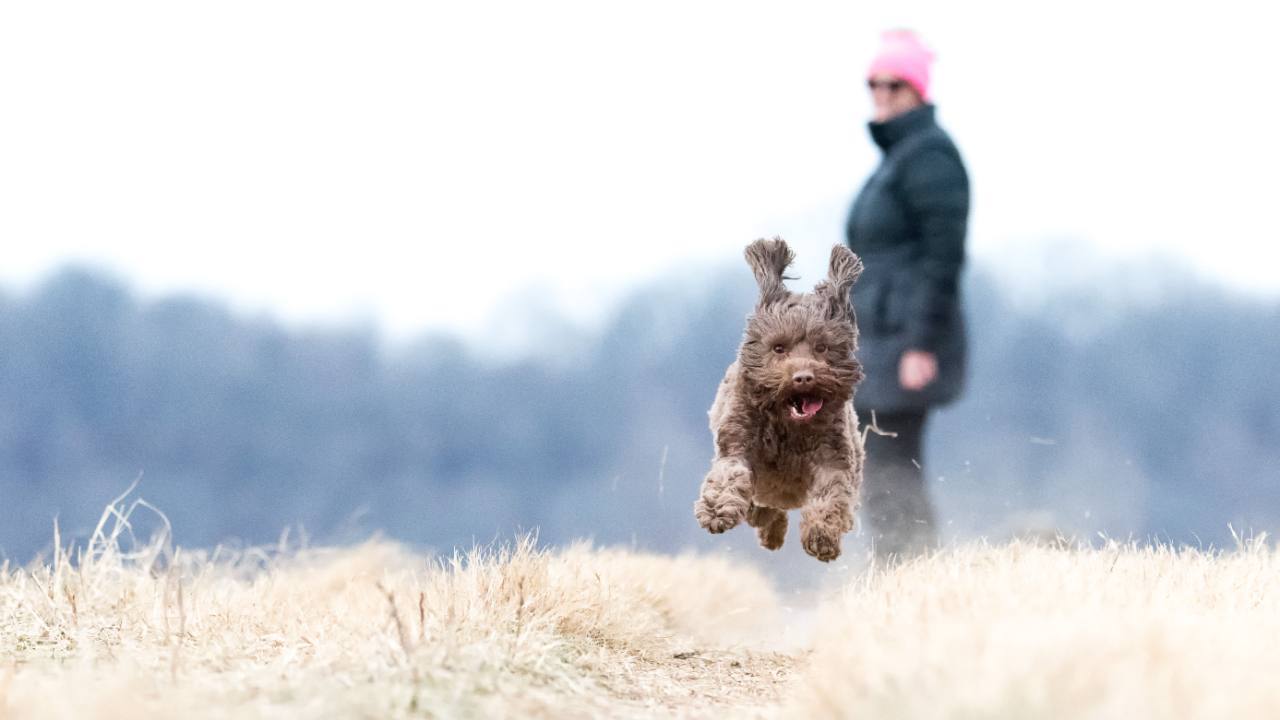
Our little dog, Spark, shares this ability. After a trip to the vet for several vaccinations earlier this year, he now remembers the route and gets visibly anxious when we head that direction in the car.
Social Creatures
Social animals like dogs and humans also experience social stressors. We exhibit a stress response not only to physical threats, but also when we perceive threats to status or belonging.
Embarrassment or shame, for example elicits blushing, that same adrenaline dilating the blood vessels of our face, neck and ears.
The resulting redness is a visible signal to others that we recognize our error, hopefully returning us to social homeostasis.
A Step Farther
In so many ways, we function exactly like a big, sophisticated agouti.
But unlike the agouti–or any other animal as far as we know–humans have developed a unique ability:
Humans can mount a stress response by merely imagining a stressor.
Only humans can initiate a physical stress response by thinking about things that might happen.
Assets and Liabilities
This unique ability is the sharpest of double-edged swords.
It enables long-term planning, blindingly complex social structures and large-scale cooperation, and the pursuit of goals that may not come to fruition in our lifetimes.
Yet, it also causes us untold suffering.
Our bodies and minds are endlessly battered by stress responses preparing us for stress that might happen in the future, like...
- Our health and the health of those we care about,
- Aging and death, even if those things are decades in our future,
- Social status,
- Relationships,
- The potential impact of climate change,
- Events on the other side of the globe,
- What might happen if one or the other candidate is elected.
...just to name a few.
As Mark Twain probably didn’t say, “I have had a great deal of trouble in my life, but most of it never happened.”
Our uniquely human ability to imagine bad outcomes and physically prepare ourselves for adversity we might encounter is useful, but mostly it just makes us miserable, because most of those imagined threats never manifest.
Imagination as an Advantage
There is good news, though.
If we can imagine our way into stress, we can imagine our way out of it, at least some of the time.
No sugar-coating: This is not easy, and those same stress hormones we are trying to manage make doing so more difficult. It requires deliberate practice over time, and there is no “arriving.”
Progress does not mean a stress-free existence. It just means failing to avoid unnecessary stress less often.
It’s worth the effort, though, because while acute stress, at manageable levels, for reasonable periods of time is good for us, chronic stress for months, years, or decades is most certainly not.
Five Tactics to Be Like the Agouti
So, here are five things you can do to stay on the right side of that double-edged blade of imagination:
1. Awareness / Mindfulness
To interrupt your anticipatory stress response to imagined events, you must first be aware that you are imagining them. Mindfulness is simply practicing the skill of noticing. “Oh, I’m lost in thought again, and these thoughts are not helpful.”
2. Exercise
When the agouti’s cortisol and adrenaline spike, the act of fleeing the predator helps return it to homeostasis.
Physical exertion helps bring these hormones back to resting levels. Some of our own suffering results from the fact that we prepare our bodies for fight or flight, but the fight never comes.
Exercise puts that cortisol and epinephrine to good use, powering your muscles instead of chronically elevating your blood pressure, suppressing your immune system, and making you insulin resistant.
3. A Healthy Information Diet
You already know this. Much of the information out there is the cognitive equivalent of Cheetos. Your body responds to it in bad ways.
Stop consuming it. In today’s information environment, avoiding empty information calories is an active sport.
Delete, unfollow, unsubscribe, block, and uninstall are your friends.
4. Growth Mindset
Our daughter was taught growth mindset at school from an early age. My generation, not so much (but I’m working on it).
Setbacks and challenges (i.e., stressors) are reframed as opportunities to learn and grow, not as evidence of a fixed deficiency or shortcoming. There are abundant growth mindset resources online.
5. Social Connection
We are social animals. Thus, we feel safest when connecting with supportive friends and family, and feeling safe is the opposite of feeling threatened. Stress levels drop when we are with the people who matter to us.
Stress Down, Effectiveness Up
And, of course, effective leadership is harder from a state of chronic stress. So not only will learning to notice and manage stress make you happier and healthier, it will improve your performance at work, too.
We’re on this journey with you. Despite our best efforts, we get stressed out over imagined future events all the time.
No one is immune and everyone needs support.
That’s part of what we do, so schedule a coaching session with us and, you never know, by the end you might just feel as peaceful as the sleepy agouti looks.
Until next time,
Greg



Responses